

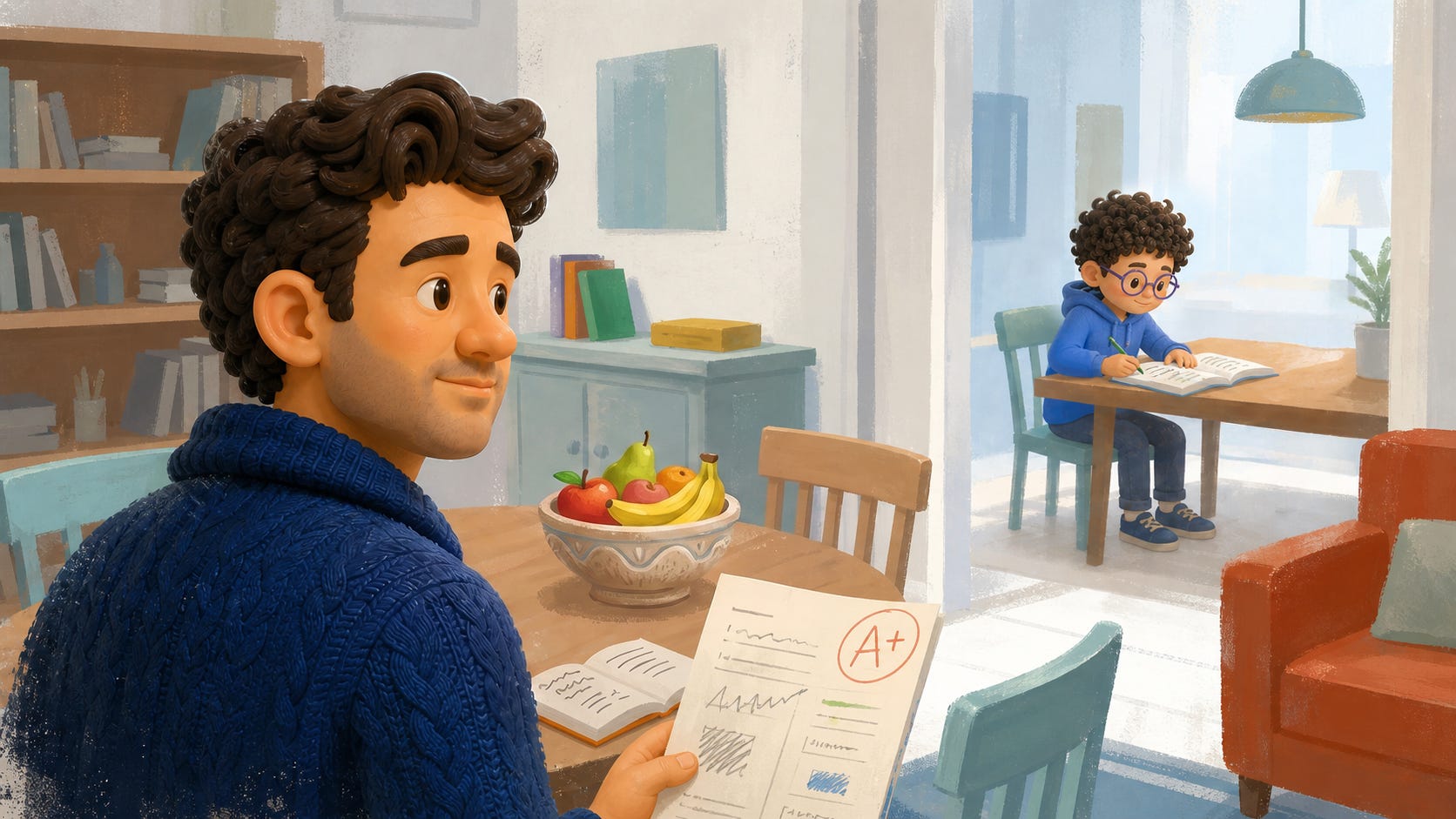
Most parents check in on maths in much the same way. Making sure homework is completed on time or looking at quiz results. Everything seems fine.
But if you have ever had that feeling of uncertainty on whether your child is progressing, you are not alone. Progress in maths is one of the hardest things to see.
Activity is easy to measure. Learning isn’t
In maths, it’s very easy to measure what a child has done, what they got right and what they got wrong. A child can complete a worksheet and achieve great results but may be relying on memory or even guesswork. Having a good memory is no doubt an important aspect of learning, but measuring understanding of maths concepts can difficult to achieve.
Learning builds on itself, which means potential gaps may stay hidden. A child might understand fractions, but struggle when percentages rely on that previous understanding. The same with multiplication when algebra is taught later on. What looks difficult with a new topic could actually be due to a gap in understanding.
Mastery in learning
Grades are useful tool to try and measure progress but it is just a snapshot. It tells you how a child performed. But does it really tell you how well they understood a concept? What grades don’t tell you is whether their understanding of the concept holds up next term or whether they can still apply the knowledge if the question is worded differently next time around.
While grades are an important indicator, it doesn’t tell you the complete picture. True understanding is being able to successfully tackle the concept when the format changes, the numbers are different, or it comes back in 2 months time.
This is what’s known as Mastery.
Mastery is when a child understands a concept well enough to not only remember it, but apply it in different ways and build upon it when learning new concepts. Without mastery, children may keep moving forward but not truly progress. Grades are easier to measure but mastery is what really matters.
Confidence is part of progress too
Confidence does not always show up on paper too, but it is one of the most reliable signs that progress is happening.
It can show up in many ways. A child who once avoided maths homework does it without being asked. A question they might have skipped gets a genuine attempt. They suddenly become more willing to give it a go with a new found confidence, not afraid of getting it wrong.
These shifts can appear before grades catch up. Confidence can often tell you more about how a child is really progressing.
Progress should feel clearer
Real progress in learning isn’t just about better grades. It’s the ability to use what has been learned, in a new situation, without having to start over again. It’s about mastering concepts and feeling confident.
Reports are useful, but most parents are not asking for more grades and numbers. They want better and clearer signals. Ones that show if their child is really progressing and mastering what they have learnt.
We’re building Brainiac, an adaptive learning platform that helps your child learn maths at the right level, with lessons that adjust as they progress.
Join the waitlist and be notified when we launch.