

Your child is using a learning app to practise division and starts getting a few questions wrong. So the app responds by giving them easier questions next. This is an example of adaptive learning. If the work is too hard, stepping back can help. And if a child is flying through it, making it harder makes sense.
But difficulty is only one reason a child might be struggling.
Maybe the explanation didn’t make sense, or they simply forgot what happened a few months earlier. Giving a child an easier question may not solve any of these problems.
Adaptive learning has been around for a while
Adaptive learning isn’t new. In its simplest form, it means changing what a student sees next based on how they are progressing. For decades, this has included things like adjusting for difficulty or moving them through different pre-determined paths.
However, technology is now making it possible for the learning experience to become more responsive. What’s changed is the ability to go beyond just adjusting difficulty and respond to what is happening while a child learns.
How Brainiac is taking adaptive learning further
This is the direction we’re building with Brainiac.
Difficulty is one of the most obvious things to adapt. But this is just the beginning. Learning doesn’t happen in a straight line, and no two children move through it in exactly the same way. A child’s learning path shouldn’t be fixed.
What really matters is whether the learning experience can adapt to the child. That might mean something they once understood has been forgotten or that a gap exists in something they learned earlier on.
We’re building learning that can draw on what has happened before and refresh concepts when they need strengthening. A child’s learning path should be shaped by their actual understanding, not just a fixed sequence of topics and lessons. That means the next step is based on what the child needs, not what comes next in the program.
If this sounds like the kind of learning you’d be interested in for your child, join the Brainiac waitlist at gobrainiac.com
Why the response needs to be different
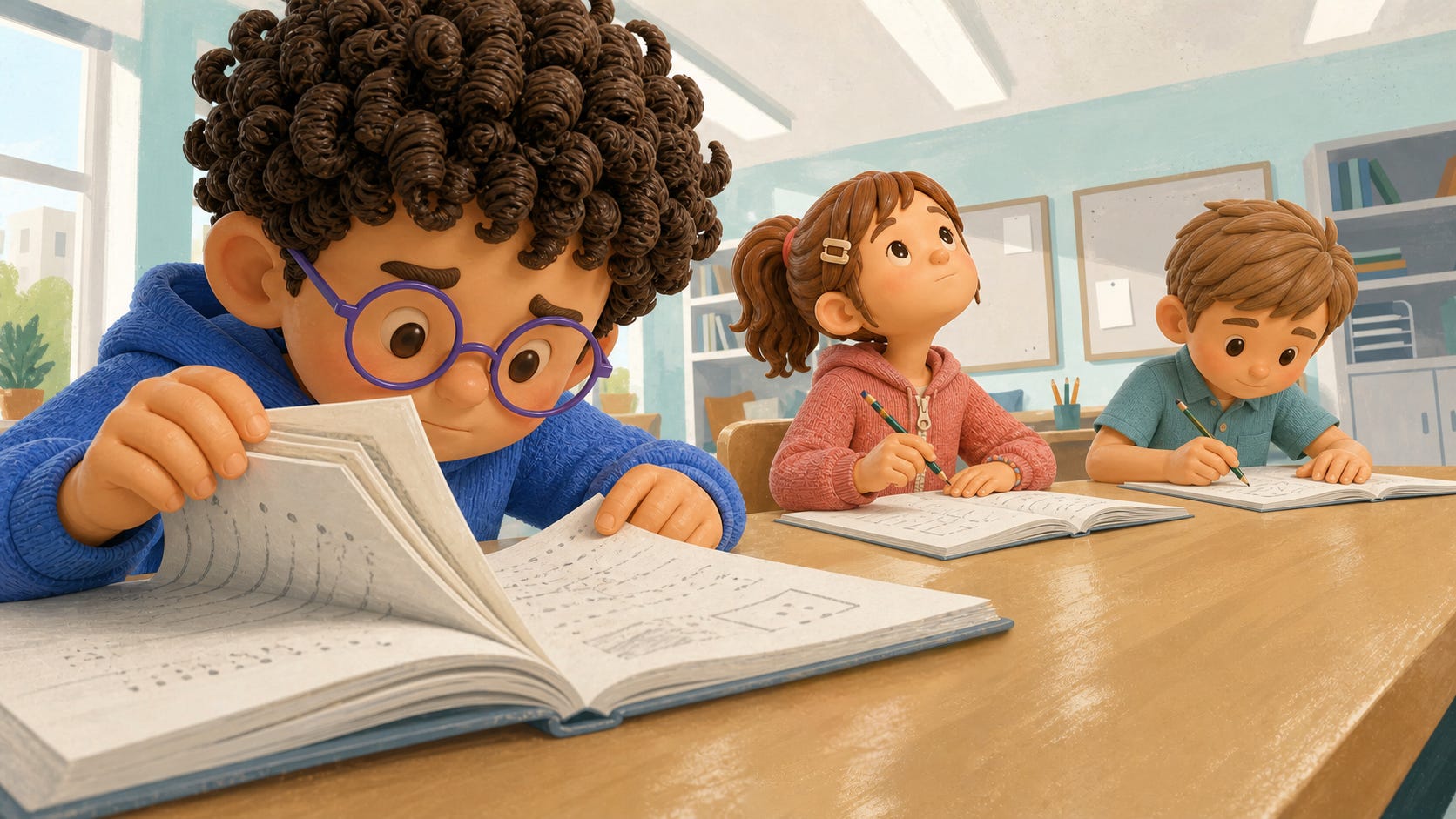
Picture three children working through the same set of division questions. They all struggle, but for completely different reasons.
The first child understands how division works, but just needs more practice.
The second understood it before, but hasn’t used it for a while and needs a refresher.
The third is actually struggling with division because they never fully understood multiplication earlier on. So division feels much harder than it should be.
Giving all three children easier division questions might help the first. But it’s the wrong response for the other two children. The second child just needs a refresher. The third child needs to go back and strengthen multiplication before coming back to division again.
This is why the response needs to be different. On the surface, the struggle might look the same, but what’s causing it may not be.
Learning that responds
Adaptive learning shouldn’t stop at difficulty. It should be able to respond to where the child is in their learning and use that to shape what happens next.
That’s what we’re building at Brainiac. Not just a smarter way to adjust difficulty, but learning that can tell those three children apart and respond to each one accordingly.
That is where adaptive learning starts to become genuinely personal.
We’re building Brainiac, an adaptive learning platform that helps your child build understanding and confidence in maths through learning that responds to them.
Join the waitlist and be notified when we launch.